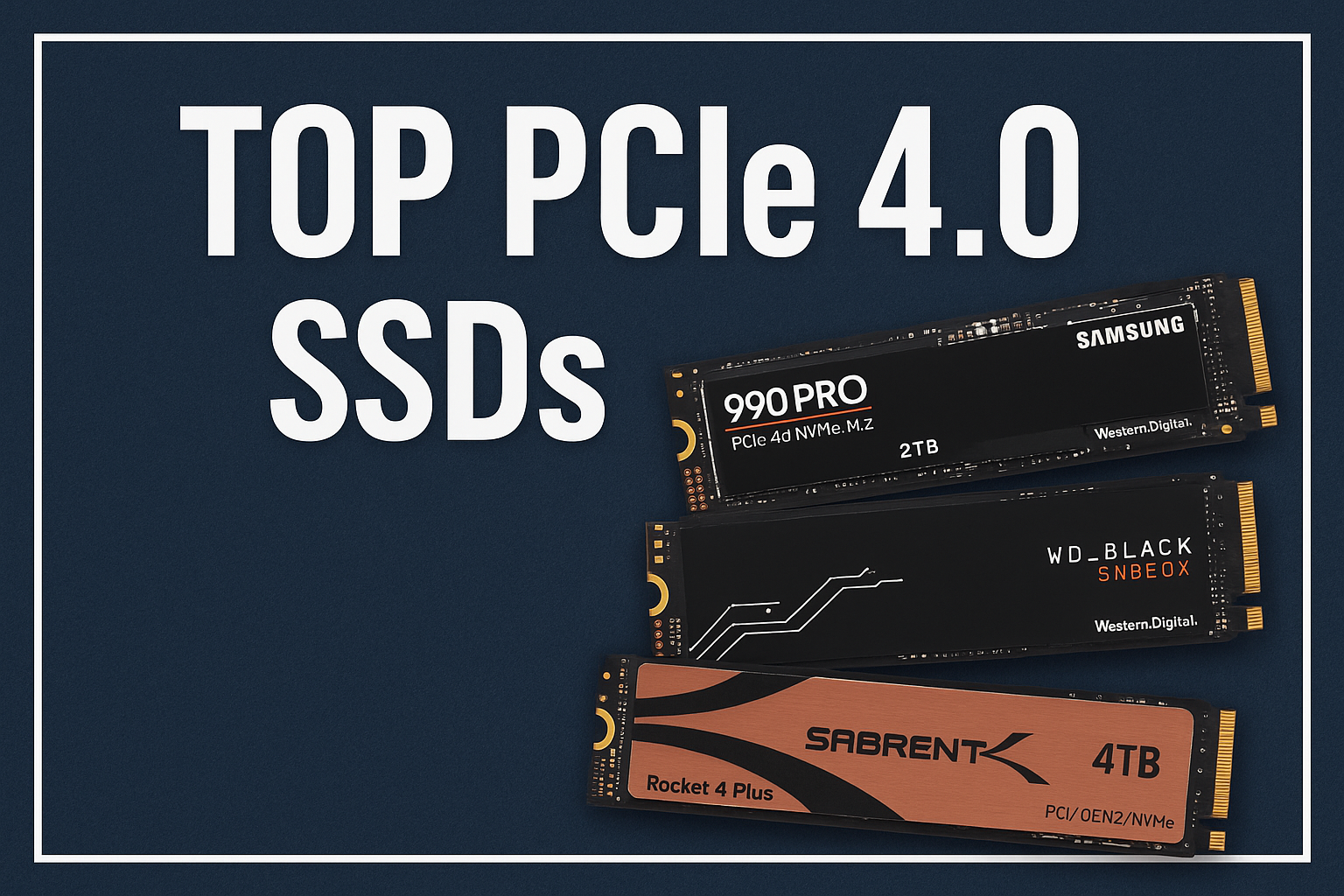
Top PCIe 4.0 SSDs for Fast, Reliable Storage
Upgrading to a PCIe 4.0 NVMe SSD is one of the easiest ways to boost your system’s overall speed. Whether you’re building a new PC or refreshing an older one, modern Gen4 drives deliver significantly faster boot times, smoother game loading, and rapid file transfers compared to SATA or early-generation NVMe storage.
In this guide, we highlight a selection of PCIe 4.0 SSDs that offer excellent performance for everyday users, gamers, and power users alike. Each model was chosen based on a combination of real-world speed, reliability, and long-term value. These drives represent dependable options for anyone looking to improve their system without overspending.
Below, you’ll find a breakdown of what made these drives stand out and why they’re strong picks for different types of workloads.
Why These Items Were Selected
-
Strong real-world performance Each SSD here provides fast sequential and random speeds, ensuring quick boot times, responsive multitasking, and reduced game loading times.
-
Reliable components and endurance ratings The selected drives offer solid endurance (TBW) and proven controller technology, making them dependable for long-term use.
-
Good price-to-performance balance These models deliver high Gen4 speeds without the premium price tag of flagship SSDs, making them ideal for budget-conscious buyers.
-
Broad compatibility All highlighted drives use the standard M.2 2280 form factor and PCIe 4.0 ×4 interface, ensuring they fit most modern desktops and laptops.
Overviews
Samsung 990 PRO 2TB NVMe PCIe Gen4 SSD


The Samsung 990 PRO 2TB is a high-end internal NVMe SSD in M.2-2280 form factor that uses a PCIe 4.0 ×4 / NVMe 2.0 interface. It delivers sequential read speeds up to 7,450 MB/s and write speeds up to 6,900 MB/s, random I/O up to ~1.4 M/1.55 M IOPS, and offers a generous 2 TB capacity — making it well suited for gaming, heavy workloads, and large-file transfers in desktop PCs and consoles.
Pros
-
Top-tier performance: Its read/write speeds and IOPS are among the highest you can get in a consumer PCIe 4.0 SSD, which helps reduce game load times, accelerate asset streaming, and speed large data transfers.
-
Large capacity (2 TB): Ample space for multiple AAA games, video projects, or heavy applications — useful if you install many large titles or work with big files.
-
Reliable controller & NAND with good endurance: Built with Samsung’s own controller and V-NAND, and rated for substantial write endurance (TBW) and a 5-year warranty, giving long-term reliability.
-
Power-efficient and well-engineered thermal design: Compared to prior generations, it offers improved performance per watt and has smarter heat control to help maintain performance under load.
Cons
-
Needs PCIe 4.0 support to shine: Without a PCIe 4.0- compatible motherboard/CPU, the drive will fall back to lower speeds, negating much of its advantage. (As some user reports on forums show, wrong M.2 slot or older chipset can limit performance.)
-
Potential thermal throttling under sustained heavy writes: Like many high-speed NVMe drives, under long sequential writes or stress workloads, temperatures may rise — so good chassis airflow or a heatsink may be necessary for maximal long-term performance.
-
Overkill for casual use: For everyday tasks or older/lighter games, the extreme speed may bring minimal real-world gains; a more modest SSD could offer better price-per-GB value.
WD_BLACK 2TB SN850X NVMe SSD
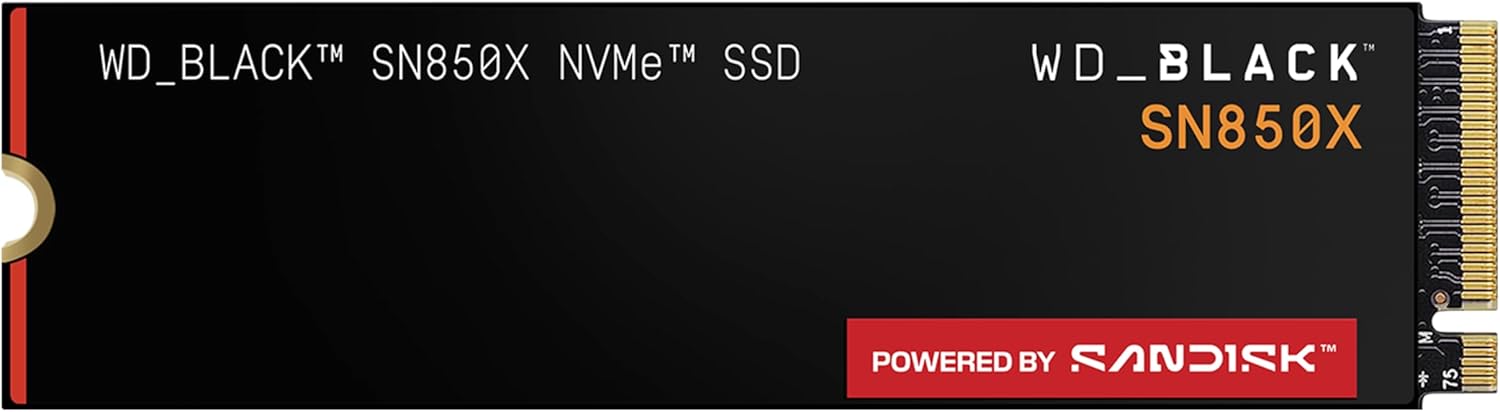
The WD_BLACK SN850X 2TB is a high-performance internal NVMe SSD in M.2 2280 form factor, using a PCIe 4.0 ×4 interface. It delivers sequential read speeds up to ~7,300 MB/s and write speeds up to ~6,600 MB/s, with DRAM and 3D TLC NAND — making it well suited for gaming, fast loading of large game libraries, and heavy-duty workloads on PCs and consoles.
Pros
-
Very high read/write performance: With up to 7,300 MB/s reads and 6,600 MB/s writes, the drive significantly reduces loading times for games, large file transfers, and asset streaming in modern titles.
-
Strong random I/O and real-world responsiveness: Its high random read/write IOPS (≈ 1,200K / 1,100K) ensure quick access and smooth performance for game asset streaming, OS responsiveness, and multitasking.
-
Large 2 TB capacity: Offers ample space for dozens of AAA games or large media libraries — ideal if you install large modern games or store lots of data.
-
Good endurance and warranty: Endurance rating (TBW) is adequate for extended use, and the drive comes with a 5-year manufacturer warranty.
-
Optional heatsink / console-ready variant: For users installing the SSD in a system with constrained airflow (e.g. gaming PC or console like PS5), the heatsink version helps maintain consistent performance under load.
Cons
-
Price is higher than budget SSDs: As a high-end Gen4 NVMe SSD, it costs more than midrange or SATA drives — may be over-kill for casual gaming or light workloads.
-
Potential thermal throttling without heatsink or good airflow: Under sustained heavy writes or prolonged gaming sessions, temperatures can rise; without proper cooling or a heatsink, performance might drop.
-
Limited benefit if system doesn’t support PCIe Gen4 x4 fully: On older motherboards or laptops that only support PCIe Gen3 or with limited NVMe lanes, the drive won’t hit its top speeds — so you may not get full value.
-
Marginal gains for gaming vs. cheaper NVMe SSDs: Some users report load-time improvements are minimal compared to previous generation SSDs — meaning real-world gaming gains might be less dramatic than synthetic benchmarks. > “the difference in loading times between a SATA SSD and an NVMe SSD … is minimal.”
-
Heatsink variant often required for consoles: If you plan to use it in a console (e.g. PlayStation 5), you must ensure you buy the heatsink-equipped version — bare M.2 modules may not be suitable.
Sabrent Rocket 4 Plus 4TB NVMe PCIe 4.0 SSD

The Sabrent Rocket 4 Plus 4TB is a high-capacity M.2 2280 NVMe SSD using PCIe 4.0 ×4 and a Phison E18 controller, designed for enthusiasts, gamers, and heavy-duty workloads. When connected to a PCIe 4.0-compatible motherboard, it offers extremely fast sequential read speeds up to ~7,100 MB/s and write speeds up to ~6,600–6,700 MB/s — making it one of the fastest 4TB consumer SSDs on the market.
Pros
-
Top-tier performance and capacity: With 4 TB of storage and very high sequential and random I/O numbers, the Rocket 4 Plus 4TB is excellent for gaming, large game libraries, asset streaming, video editing, and large file transfers.
-
Strong endurance and warranty: The 4 TB model has a high endurance rating (≈ 2800 TBW) and comes with a 5-year warranty (after registration), offering confidence for long-term heavy use.
-
PCIe 4.0 advantage: On a compatible motherboard, the drive realizes its full speed potential — much faster than typical SATA or PCIe 3.0 SSDs, enabling very fast load times and transfer speeds.
-
Good value among high-end SSDs: Compared to other 4 TB NVMe drives with similar speeds, the Rocket 4 Plus often offers competitive pricing for its performance and capacity tier.
Cons
-
Requires PCIe 4.0 to realize full performance: If installed on a motherboard limited to PCIe 3.0, speeds will fall to ~3,400 MB/s read and ~3,000 MB/s write, significantly undercutting its advantage.
-
Thermal and cooling considerations: Because of high throughput, the drive can get hot under load; many reviewers recommend adding a heatsink or ensuring good airflow to avoid thermal throttling.
-
Potential overkill & cost for casual users: The 4 TB capacity and high speeds may be unnecessary for users with modest storage needs or light workloads — making the price-to-benefit ratio less attractive.
-
Mixed real-world gains for gaming: While benchmarks show big numbers, many games and everyday tasks don’t saturate such high bandwidth, so the real-world benefit vs. more modest SSDs can be limited.
Kingston KC3000 2TB NVMe PCIe 4.0 M.2 SSD
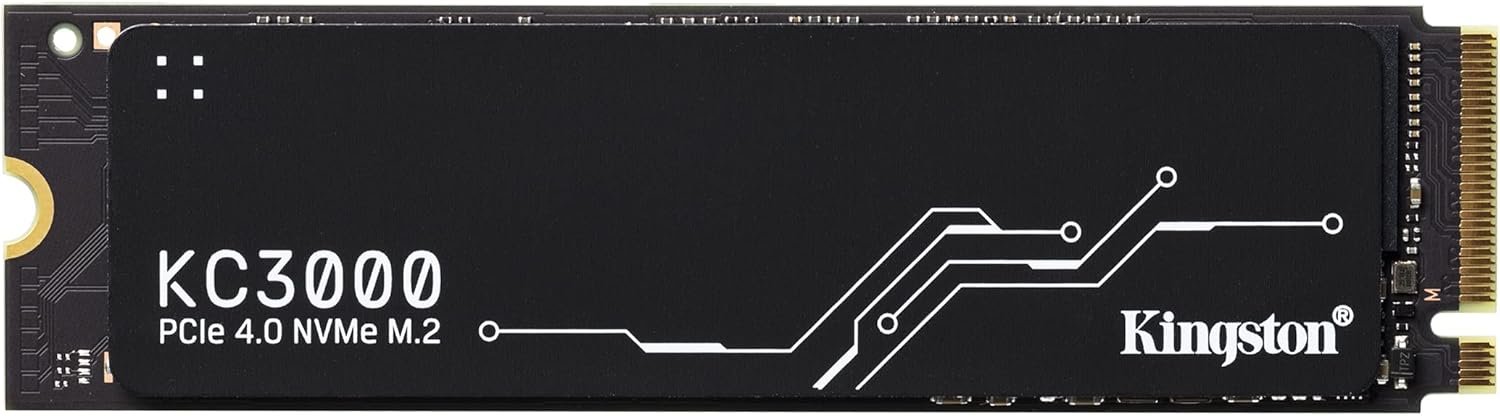
The Kingston KC3000 2TB is a high-performance internal NVMe SSD (M.2 2280) using PCIe 4.0 x4 and a Phison E18 controller with 3D TLC NAND and DRAM cache. It delivers up to 7,000 MB/s sequential read and write speeds, and up to 1,000,000 IOPS for random 4K reads/writes — making it suitable for gaming, heavy workloads, and fast loading or content-creation tasks.
Pros
-
Very high read/write performance — The 2TB model of KC3000 achieves blazing-fast 7,000 MB/s sequential read and write, translating to rapid game load times, faster installs, and swift asset streaming for modern titles.
-
Strong random I/O and responsiveness — Up to 1,000,000 IOPS for random reads/writes means snappy OS responsiveness, quick application launches, and smooth multitasking under heavy workloads.
-
Generous capacity and future-proofing — With 2 TB capacity, it offers ample space for large game libraries, media, and project files, reducing the need for frequent storage upgrades.
-
Good endurance and warranty — Rated for 1.6 PBW and backed by a 5-year warranty, the drive is built for durability under sustained use.
-
Compact form factor and built-in heat spreader — The M.2 2280 size ensures it fits in most desktops and laptops; the integrated low-profile graphene aluminum heat spreader helps dissipate heat under load.
Cons
-
Thermal sensitivity under sustained load — As with many high-speed NVMe drives, under heavy writes or long gaming / editing sessions the drive can get hot, possibly leading to thermal throttling if case airflow or cooling is weak.
-
Performance depends on PCIe 4.0 support — To realize its full 7,000 MB/s speeds, you need a motherboard/CPU that supports PCIe 4.0 x4; on older PCIe 3.0 systems, performance will be limited.
-
Could be overkill for light use — For casual tasks or light games, the extreme performance may not provide noticeable benefits over mid-range SSDs, making it a less efficient choice if you don’t need high throughput.
-
Mixed real-world results for some users — A minority of users report speed variability, thermal issues, or drive disconnections — especially in systems with poor cooling or incompatible BIOS/slots.
Crucial P310 1TB PCIe 4.0 NVMe M.2 SSD

The Crucial P310 1TB is a PCIe 4.0 ×4 NVMe M.2 2280 SSD designed for desktops, laptops, and even handheld gaming/compact systems. It advertises sequential read speeds up to 7,100 MB/s and write speeds up to 6,000 MB/s, with a 1 TB capacity that makes it suitable for a primary boot/game drive or a large game library.
Pros
-
Very fast Gen4 performance for the price — The P310 delivers substantial sequential read/write throughput (7,100 MB/s read, 6,000 MB/s write) which significantly improves boot-up, loading times, file transfers and overall system responsiveness compared to SATA or older NVMe SSDs.
-
Good value / cost-per-GB balance — As a 1 TB Gen4 SSD at a mid-range price point, it offers a strong balance between speed and cost, making it a sensible upgrade from older drives without overspending.
-
Easy installation & broad compatibility — With its standard M.2 2280 form-factor and NVMe interface, it fits in most modern desktops and laptops, offering a straightforward performance boost over older storage.
-
Decent endurance for typical gaming and everyday use — The 1 TB model is rated for 220 TBW (terabytes written), which for typical consumer usage — OS, games, and regular file operations — is ample and should last for years.
Cons
-
DRAM-less design with HMB may limit heavy workloads — The P310 uses a DRAM-less controller (relying on Host Memory Buffer), which in some benchmarks or sustained heavy I/O workloads may show less stable performance compared to DRAM-equipped SSDs.
-
Performance may vary depending on system configuration — Some users report that speed gains are less than expected when the drive is paired with older motherboards or systems that don’t fully support PCIe 4.0 ×4, causing noticeable speed reductions.
-
Thermal throttling under heavy load possible — Without a heatsink or adequate airflow in compact laptops or small-form-factor PCs, the drive may heat up under sustained writes or long gaming sessions, possibly leading to throttling.
-
Not ideal for heavy professional workloads — While good for gaming, OS, and general use, for heavy content-creation tasks (e.g. continuous video editing, very large file transfers), the DRAM-less architecture and QLC/3D NAND may fall short compared to higher-end NVMe SSDs.