Best TVs for Gaming and Streaming: Top Picks for 2025
Choosing the right TV can make a significant difference in both gaming and streaming experiences. With modern consoles and high-quality streaming content, a TV needs to deliver vibrant colors, high contrast, low input lag, and support for advanced HDR formats. Whether you enjoy fast-paced competitive games or cinematic single-player titles, the right combination of panel technology, refresh rate, and smart features ensures smooth gameplay and immersive visuals.
In addition to gaming, a TV must also handle streaming platforms efficiently. Integrated smart platforms, voice assistants, and compatibility with devices like Apple AirPlay allow seamless access to content, while features like Dolby Vision, HDR10+, and Dolby Atmos enhance movies and shows. Choosing a TV that balances these capabilities is crucial for a satisfying all-around entertainment setup.
This guide highlights top TVs currently available, ranging from premium QD-OLED and OLED models to high-performing mini-LED and mid-range QLED options. Each selection has been evaluated based on real user feedback, expert reviews, and the feature sets that matter most to gamers and media enthusiasts alike.
Selection Criteria:
-
Gaming Performance: TVs were prioritized for low input lag, high refresh rates (120–165 Hz), and VRR support to ensure smooth gameplay on next-gen consoles and gaming PCs.
-
HDR and Color Quality: High peak brightness, deep blacks, wide color gamut, and support for HDR formats (Dolby Vision, HDR10+) were key for vibrant visuals.
-
Smart Features & Connectivity: Built-in smart platforms (Google TV, Fire TV), voice control, Apple AirPlay, and multiple HDMI 2.1 ports ensured flexibility and ease of streaming.
-
Audio Performance: TVs with integrated Dolby Atmos or advanced sound systems were favored for immersive audio without immediate need for external speakers.
-
User Feedback & Reliability: Only models with strong Amazon reviews, high ratings, and consistent positive user experiences were considered to ensure both performance and satisfaction.
Overviews
LG OLED C3


The LG C3 is a mid-to-high-end OLED TV built around LG’s OLED evo panel and an updated image processor. It targets gamers with a native 120Hz panel, multiple HDMI 2.1 inputs, extremely low response time, broad VRR/FreeSync/G-Sync support and a comprehensive Game Dashboard. The C3 is widely sold on Amazon and is consistently recommended for console and PC gaming where perfect black levels, pixel-level contrast and instant pixel response are priorities.
Pros
-
Absolute black & contrast: As an OLED, the C3 delivers pixel-level dimming for perfect blacks and infinite contrast that makes dark scenes and HDR details pop—especially valuable in cinematic or atmospheric games.
-
Fast response & low input lag: Native 120Hz panel and very low input lag make gameplay feel responsive for competitive titles and fast action.
-
Full gamer feature set: Multiple HDMI 2.1 ports, 4K@120Hz support, ALLM, VRR, and compatibility with NVIDIA G-Sync and AMD FreeSync provide great cross-platform support (PC and consoles).
-
Excellent motion clarity for OLED: While OLEDs can show some pixel persistence, the C3’s processing and high refresh rate minimize blur and make fast camera pans look clean.
-
Smart platform & updates: webOS offers a polished smart TV experience and LG regularly ships firmware improvements.
Cons
-
Peak brightness vs. mini-LED/QLED: OLEDs, including the C3, generally deliver lower peak HDR brightness than mini-LED/QLED alternatives, which can make HDR highlights less eye-popping in very bright rooms.
-
Burn-in risk (low, but present): Prolonged static UI elements (HUDs, scoreboards) can theoretically increase burn-in risk over many years; modern usage and LG’s mitigation tools reduce but do not eliminate that possibility.
-
Cost at larger sizes: High demand and premium panel tech make larger C3 sizes relatively expensive compared with mid-range LED mini-LED options.
-
Reflection handling in bright rooms: Glossy OLED panels can show reflections more than anti-glare neo-QLEDs, so a bright, sunny room may reveal more glare.
Samsung S95D

The Samsung S95D is a QD-OLED (quantum-dot OLED) that blends OLED’s pixel-level contrast with quantum-dot color and higher effective brightness than conventional WOLEDs. It targets gamers who want OLED blacks plus brighter HDR highlights and improved color volume. Samsung equips the S95D with HDMI 2.1 features, low input lag and game-focused picture modes to deliver a top-tier gaming experience.
Pros
-
QD-OLED color and brightness: Quantum-dot enhancement yields richer colors and stronger HDR highlights compared with many traditional OLEDs while retaining deep blacks.
-
Excellent input performance: Low latency and responsive pixel switching make it well suited to 4K@120Hz gaming on modern consoles and high-end PCs.
-
Great HDR impact: Higher effective peak brightness makes HDR highlights feel punchier, improving immersion in HDR-enabled games.
-
Advanced processing / anti-glare options: Samsung’s processing and screen coatings reduce bloom and improve bright-room usability versus standard OLEDs.
Cons
-
Premium price: QD-OLED is premium technology and S95D pricing tends to be at the top of consumer TV lines.
-
Potential availability/stock variability: Popular flagship models sell out quickly and price/promotions can vary across retailers.
-
Burn-in caveat: Like all OLED-based technologies, long-term static content carries a small burn-in risk—manufacturers include mitigation tools, but the risk is not zero.
-
Power draw & heat in bright HDR scenes: Increased brightness and quantum dot layers can raise power consumption and heat compared with lower-brightness OLEDs.
Samsung Neo QLED QN90C
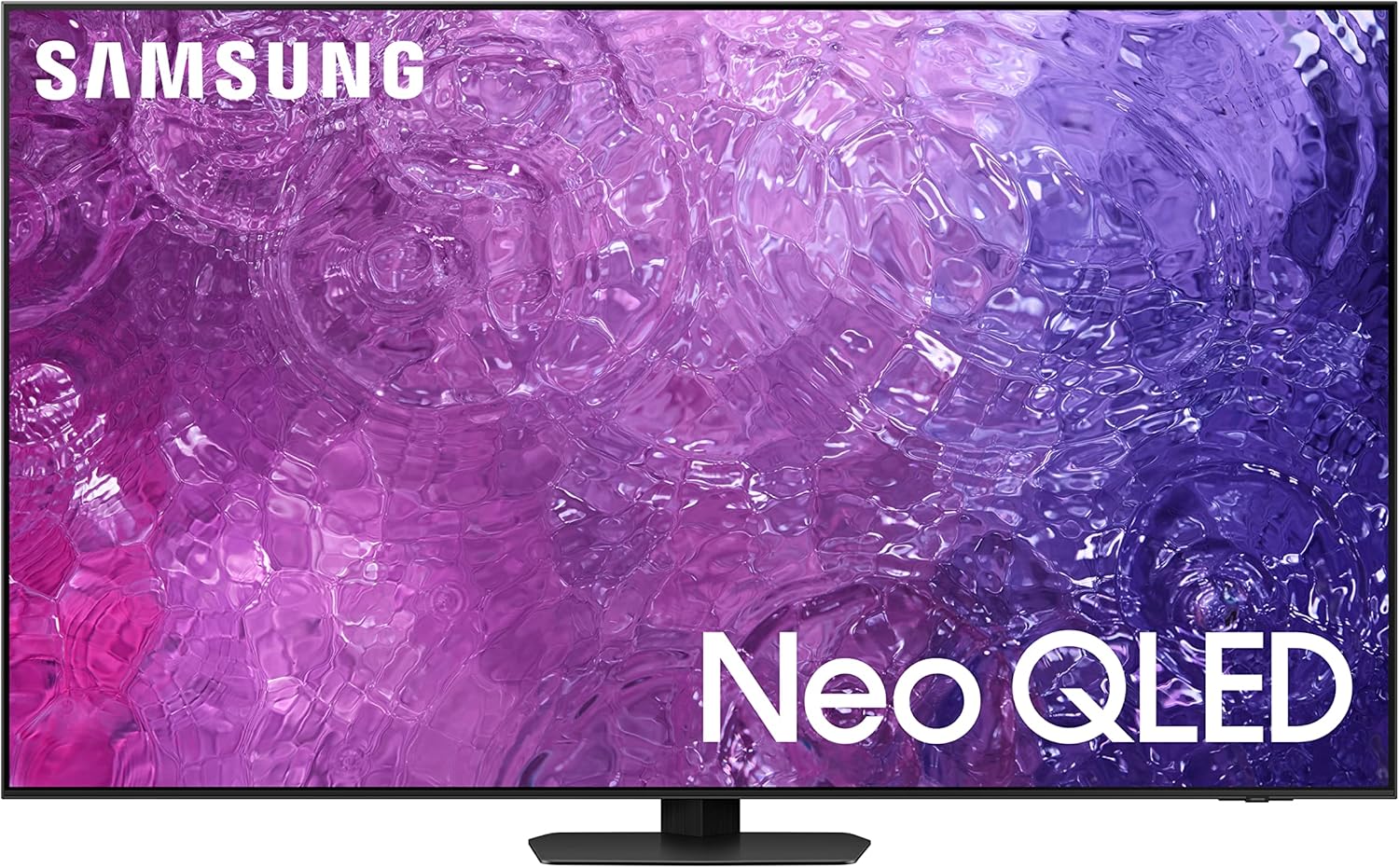
The Samsung QN90C is a Neo-QLED (mini-LED backlight with quantum dot) designed for bright-room performance and superb HDR. It’s a strong choice for gamers who play in well-lit spaces and want low input lag, high peak brightness, aggressive local dimming and excellent reflection handling—while still getting good response times for 4K@120Hz gaming. The QN90C is a frequent best-seller on Amazon in the premium LED category.
Pros
-
Very high peak brightness: Mini-LED backlighting delivers bright HDR highlights that remain visible in bright rooms.
-
Strong local dimming & contrast for LED: Dense mini-LED zones help maintain good contrast and suppress blooming more effectively than older LED designs.
-
Low input lag & high refresh support: HDMI 2.1 ports, ALLM and VRR support make it compatible with next-gen consoles and gaming PCs.
-
Excellent anti-reflection and viewing in bright rooms: The QN90C’s anti-glare treatment and high brightness make it ideal for sunlit living rooms.
Cons
-
Not true pixel-level black: While local dimming is very good, it cannot fully match OLED’s per-pixel black level for the deepest blacks in very dark scenes.
-
Blooming in extreme HDR contrasts: Very high-contrast scenes can still show some haloing around bright objects against very dark backgrounds, depending on size and content.
-
Bulk & weight with backlight array: The mini-LED backlight and cooling can make sets slightly thicker/heavier than thin OLED panels.
-
Price vs mid-range LED models: The QN90C sits in the premium LED tier and costs more than entry/mid-level LED TVs.
Hisense 75″ U8 Mini-LED ULED 4K UHD

A high-end 75″ mini-LED QLED TV with native 165Hz, VRR up to 288Hz, peak brightness of 5000 nits, HDR10+, Dolby Vision IQ, IMAX Enhanced, and 4.1.2-channel Dolby Atmos audio. Designed for gaming and HDR content, it features Google TV and multiple HDMI 2.1 ports for console and PC use.
Pros
-
Extremely bright HDR and vivid colors with local dimming.
-
Low input lag and high refresh rate ideal for gaming.
-
Strong Google TV platform and decent built-in Dolby Atmos audio.
Cons
-
Large and heavy, can be tricky to wall-mount.
-
Some units show uniformity issues (dirty screen effect).
-
Built-in audio, while good, may not satisfy home theater enthusiasts.
-
Brightness may need adjustment in dark rooms.
TCL 65″ Q65 QLED 4K Smart TV

A 65″ 4K QLED TV with HDR Pro+, Dolby Vision, Dolby Atmos, Fire TV (Alexa built-in), and Apple AirPlay 2. Offers vibrant colors, solid HDR performance, and convenient smart features for streaming and casual gaming.
Pros
-
Good color and HDR for the price.
-
Built-in Fire TV with Alexa and AirPlay 2.
-
Decent Dolby Atmos audio for built-in speakers.
Cons
-
Not optimized for high-refresh competitive gaming.
-
Contrast and brightness lower than premium TVs.
-
Viewing angles limited; off-center colors may shift.