Best Espresso Machines on Amazon: Top Picks for Quality & Value
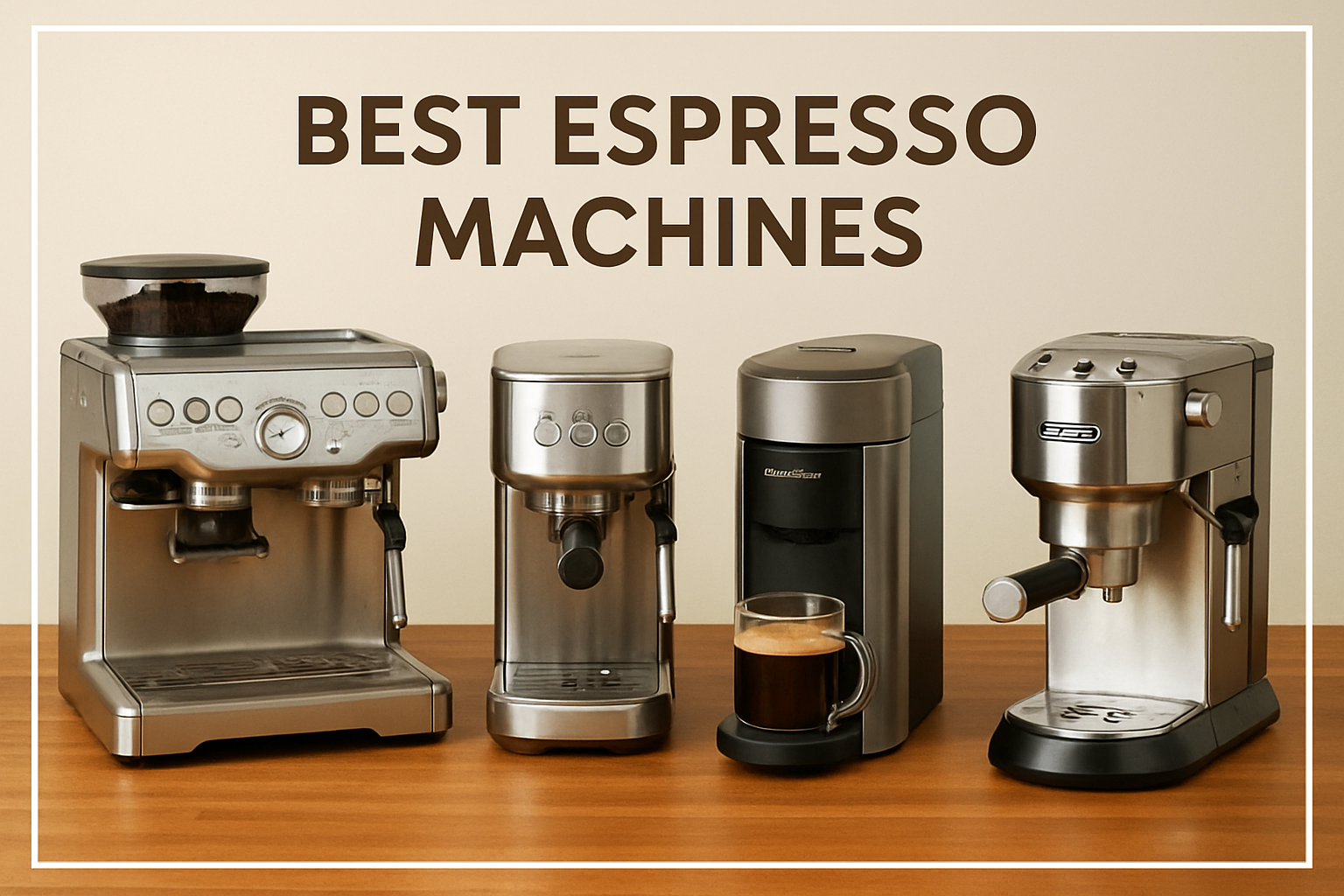
Choosing the right espresso machine can transform your daily coffee ritual—from mediocre shots to rich, café-style espresso in your own kitchen. With countless models available on Amazon, recommendations vary widely in price, complexity, and features. This guide highlights five of the most popular, top-rated machines that consistently deliver strong performance, excellent user satisfaction, and reliable build quality according to extensive customer feedback from Amazon reviews and social community discussions.
Whether you’re a coffee enthusiast seeking hands-on control or someone who values convenience and consistency, there’s a machine here to match your needs. From fully automatic bean-to-cup systems to semi-automatic and capsule-based options, each selected espresso maker has garnered thousands of positive reviews, high ratings, and frequent recommendations from real users. You’ll find both beginner-friendly and more advanced models that excel across brewing quality, ease of use, durability, and overall value.
This guide is designed to help you compare popular choices with clear descriptions of their strengths and trade-offs. By understanding what each machine offers—and what users appreciate about them—you can make a confident choice tailored to your coffee preferences and lifestyle.
Selection Criteria
To choose these espresso machines, I considered several key factors rooted in user experience and objective performance indicators:
- High Ratings and Review Volume: Only models with substantial numbers of user reviews and consistently strong average ratings on Amazon were considered to ensure recommendations reflect broad owner satisfaction.
- Popularity and Sales Trends: Machines that frequently appear in Amazon best-seller lists or receive regular purchases were prioritized, suggesting real market demand and trust.
- Diverse Use Cases: The list includes a range of machine types—semi-automatic, super-automatic, and pod systems—to suit different user preferences, skill levels, and daily routines.
- Real-World Feedback: Beyond star ratings, I factored in detailed user opinions from Amazon and social media, including practical insights about durability, ease of use, and support, which reflect long-term ownership experiences.
- Value for Money: Products were evaluated on how well they balance features, build quality, and price, ensuring that each pick represents meaningful value within its category.
Overviews
Breville Barista Express
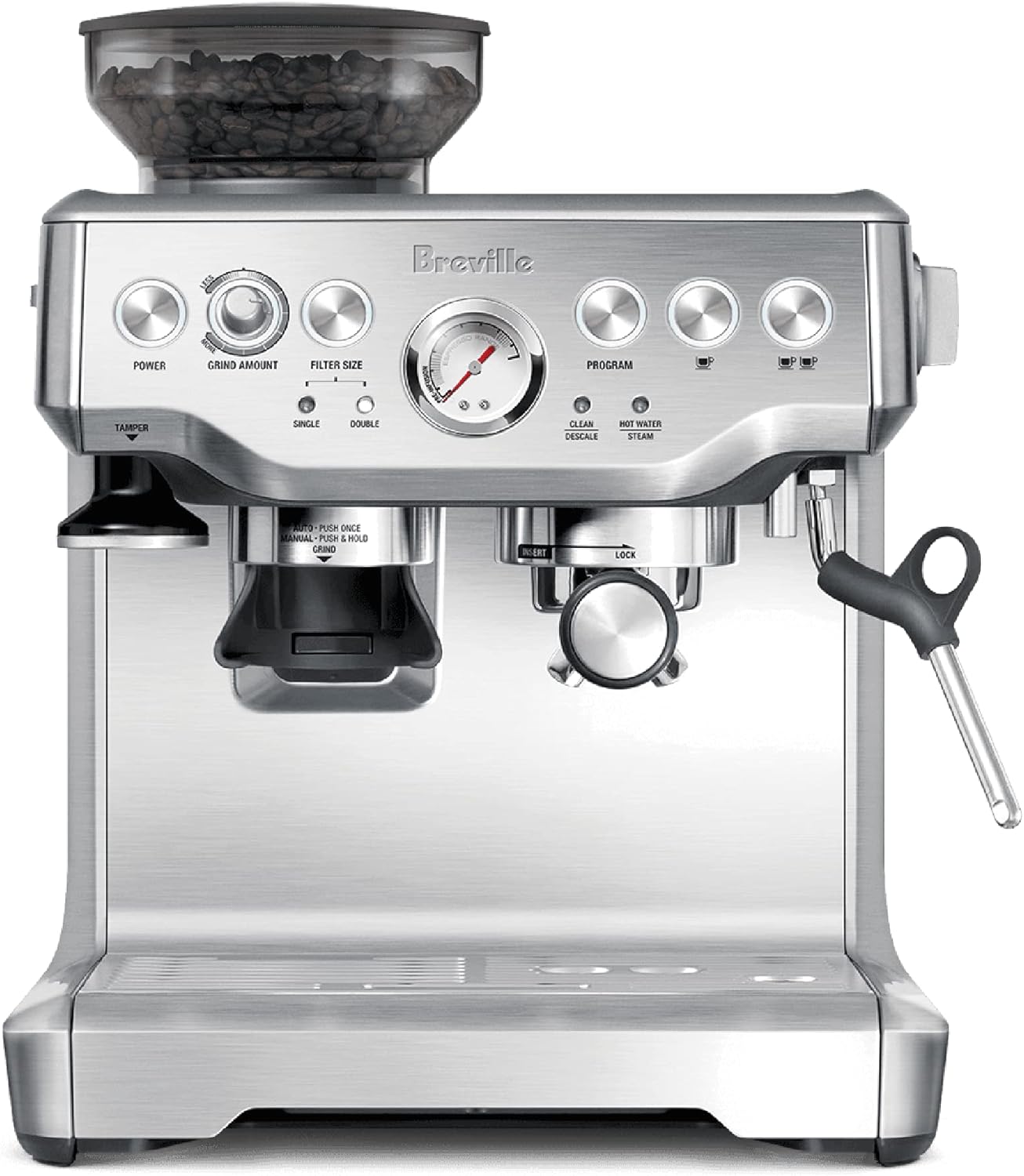

The Barista Express is a semi-automatic, all-in-one home espresso machine with an integrated conical burr grinder, dose-control grinding, and a steam wand for milk texturing; it’s aimed at home baristas who want café-style control (grind, dose, tamp, extract) without buying separate components.
Pros
-
Integrated grinder and dose control: fresh grinding into the portafilter simplifies workflow and gives better crema and flavor control compared with preground shots.
-
High user control and repeatability: adjustable grind, dose and temperature allow experienced home users to dial in shots closely to taste.
-
Build quality and parts availability: stainless construction and widespread ownership means replacement parts and community troubleshooting are easy to find.
-
Strong community and resources: extensive online guides, videos, and third-party accessories help users improve results quickly.
Cons
-
Learning curve: because it exposes manual steps (dosing, tamping, milk steam technique), beginners may need time and practice to get consistent shots.
-
Size and counter footprint: heavier and larger than compact single-serve or capsule machines; needs sufficient countertop space.
-
Price and maintenance: higher initial cost than pod machines and requires routine cleaning/descaling and occasional burr maintenance.
-
Noise and grinder dust: the on-board grinder adds noise and produces fines/retained grounds that need cleaning.
Breville Bambino Plus

The Bambino Plus is a compact, heat-stable semi-automatic espresso machine that offers fast heat-up, automatic steam wand control for consistent milk texture, and straightforward controls aimed at users who want near-barista results with minimal fuss.
Pros
-
Fast heat-up and compact footprint: reaches brewing temperature quickly and fits small kitchens while delivering quality shots.
-
Automatic milk steaming: programmable steam wand settings deliver consistent microfoam for latte/cappuccino without advanced technique.
-
Simpler workflow than full prosumer machines: less fiddly dosing and fewer adjustments, which is good for users who want good results with less setup.
-
Solid build and reputation: Breville’s warranty/support and frequent positive owner reviews make it a dependable midrange pick.
Cons
-
Limited grinder options: no integrated grinder (requires separate grinder to get best results), increasing total system cost for optimal performance.
-
Less manual control: users who want fine control over dosing and extraction may find it restrictive compared with larger prosumer machines.
-
Milk wand limitations: while automatic and convenient, the wand has less flexibility for advanced milk art than commercial steam wands.
-
Price versus features: in its bracket it sits above basic machines, so buyers expecting a bargain may find it pricey for what it omits.
Nespresso VertuoPlus

The Nespresso VertuoPlus is a capsule-based single-serve system that uses centrifusion technology and barcode-read capsules to produce espresso and larger coffee sizes with very low user effort; it targets convenience and consistency over manual control.
Pros
-
Extreme convenience and speed: one-button operation, short heat-up, and virtually no barista skill required.
-
Consistent results and crema for a capsule system: barcode-driven extraction profiles aim to optimize each capsule type automatically.
-
Low maintenance: minimal cleaning and no grinding/portafilter mess; ideal for quick mornings or office use.
-
Wide capsule variety and availability: many coffee types and flavors from Nespresso and third-party capsule makers.
Cons
-
Ongoing capsule cost and waste: per-cup cost is higher than fresh beans and requires managing used capsule disposal or recycling.
-
Limited customization: users cannot adjust grind, dose or extraction beyond capsule choices; espresso purists may find flavor depth missing.
-
Dependency on proprietary capsules: long-term availability and price are subject to Nespresso’s product decisions and third-party supplier changes.
-
Environmental concerns: unless you participate in recycling programs, capsule waste is a negative for eco-minded buyers.
De’Longhi Dedica

The Dedica is a slim, pump-driven manual espresso machine designed for small counters; it offers fast heat-up, a manual/steam frother, and compatibility with ground coffee and E.S.E. pods, making it a popular choice for budget-conscious users who still want a real espresso workflow.
Pros
-
Very compact and stylish: one of the narrowest semi-automatic machines — great for tiny kitchens or dorms.
-
Affordable entry to real espresso: delivers better espresso and milk steaming control than many low-end machines at a modest price.
-
Versatility: accepts ground coffee and E.S.E. pods; adjustable drip tray for taller cups.
-
Fast performance: heats up quickly and is simple to operate for routine espresso and cappuccino.
Cons
-
Limited boiler and steaming power: small thermoblock systems deliver lower steam performance than larger dual-boiler machines, which can affect milk microfoam consistency.
-
Durability and longevity: while popular, some long-term users report parts wear and the need for repairs after several years heavy use.
-
Manual technique required: good espresso still depends on tamping and extraction skill, so novices may need practice.
-
Water capacity and workflow: smaller reservoir means more frequent refills for multiple drinks.
De’Longhi Magnifica

The Magnifica family are super-automatic bean-to-cup machines with an integrated grinder, automated brewing, and milk frothing options; they are targeted at users who want one-touch drinks from beans with minimal hands-on preparation.
Pros
-
One-touch convenience with whole beans: integrated grinder, dosing and automated extraction make daily use effortless.
-
Wide drink variety: many models offer espresso, lungo, americano and milk-based drinks with programmable recipes.
-
Less manual maintenance than semi-autos for users who prefer automation: built-in brew units and cleaning cycles simplify upkeep.
-
Good value for features: delivers many features of café machines at a lower price point than full commercial equipment.
Cons
-
Less control over extraction: grinders, brew units and dosing are automated, which limits a user’s ability to fine-tune extraction to taste.
-
Cleaning and descaling still required: while automated, internal components require maintenance and occasional professional servicing on older machines.
-
Noise and size: integrated grinders and pumps add noise and the units are bulkier than capsule machines.
-
Repair complexity and cost: super-automatic internals are more complex and can be costlier to repair than simpler portafilter machines.